Twelve Hours Apart
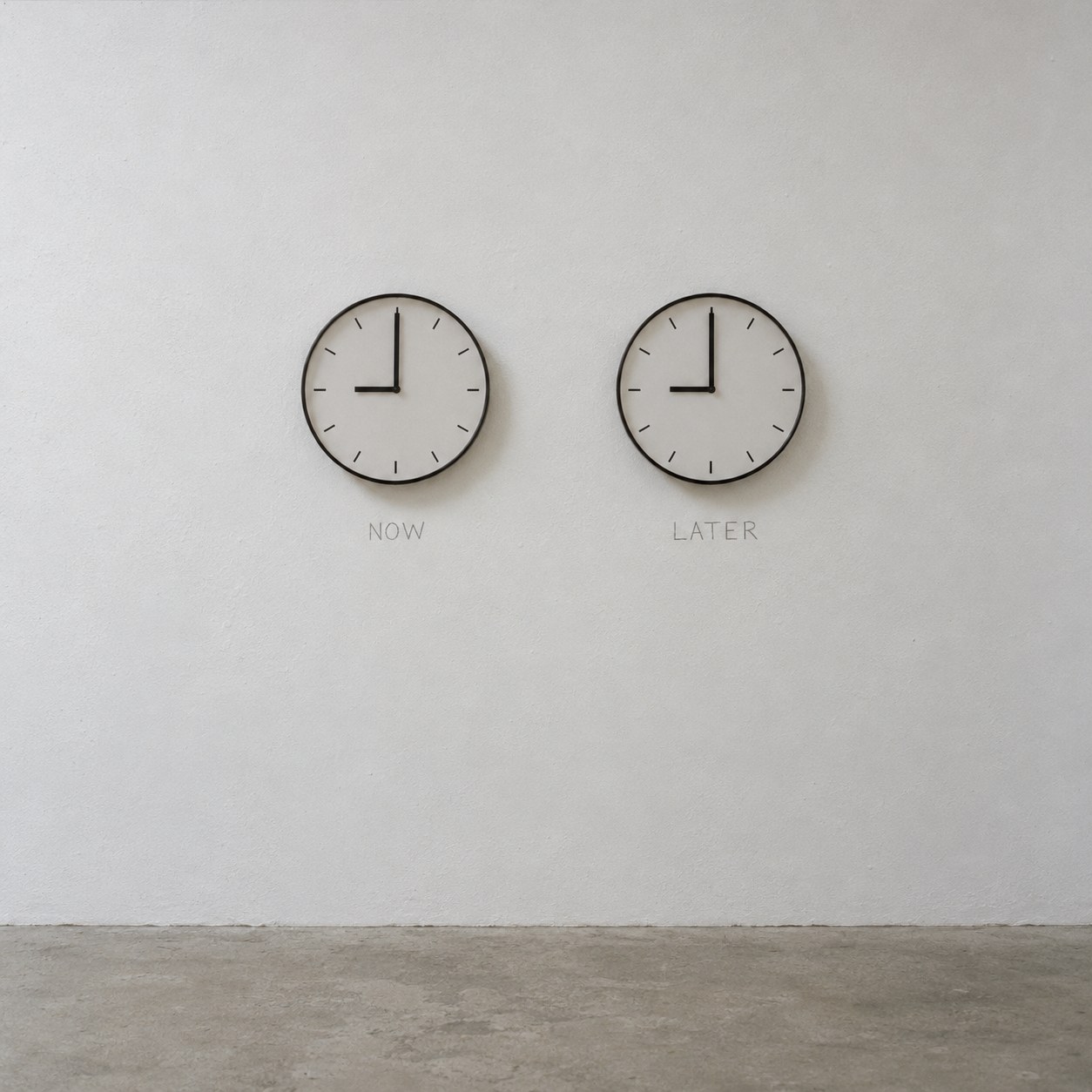
A clock with twelve hours on its face cannot tell morning from night. It turns the day into two laps of the same track, so every hour it shows is really two hours. The dial is made to forget exactly one thing: twelve hours.
So these two clocks are as far apart as two clocks can be, and they look the same. One shows now. The other shows a time that has not come yet. On the face, the present and the future are the same picture.
The difference is still there. It just isn't anywhere you can look. It lives in two pencil words on the wall, and in your willingness to believe them. Rub out the words and the distance is gone, though nothing has moved.
Felix Gonzalez-Torres hung two clocks side by side and let them drift, so time would slowly pull them apart. Time can't do that here. These two were parted from the start, and it never showed.
Augustine said he knew what time was until someone asked him to explain it. These clocks give the same answer. Ask them the time and they agree. Ask them when, and only the wall replies.
Both clocks are right. That is the problem.